Let's talk about the thing nobody wants to say
Your partner wants sex more often than you do. And instead of feeling connected, you're now feeling pressured, resentful, or guilty. That's not a sign the relationship is broken. That's a sign you both need a different framework for how you approach desire.
Mismatched sexual frequency is one of the most common reasons couples end up in my office. And here's what I've learned after two decades of working with them: the couples who navigate this successfully aren't the ones who force themselves into the same rhythm. They're the ones who separate their individual pleasure from couple pleasure, and then rebuild intimacy on a schedule that works for both of them.
Why this feels like a bigger problem than it is
When your partner initiates sex and you're not in the mood, the reflexive no feels like rejection to them. That no accumulates. After a few months of accumulation, they start wondering if you still find them attractive, or if something has shifted in how you feel about the relationship. Meanwhile, you're feeling pressured and guilty, which makes you even less interested in sex. It's a loop that spirals downward fast.
But here's the thing: desire doesn't work on a schedule your partner sets. It works on a schedule your body and brain agree on. Forcing sex when you're not genuinely interested doesn't create intimacy. It creates resentment. And resentment is the actual relationship killer.
The framework that actually works
I tell couples to think of it like this: there's partner sex, and there's solo pleasure. They're completely separate conversations.
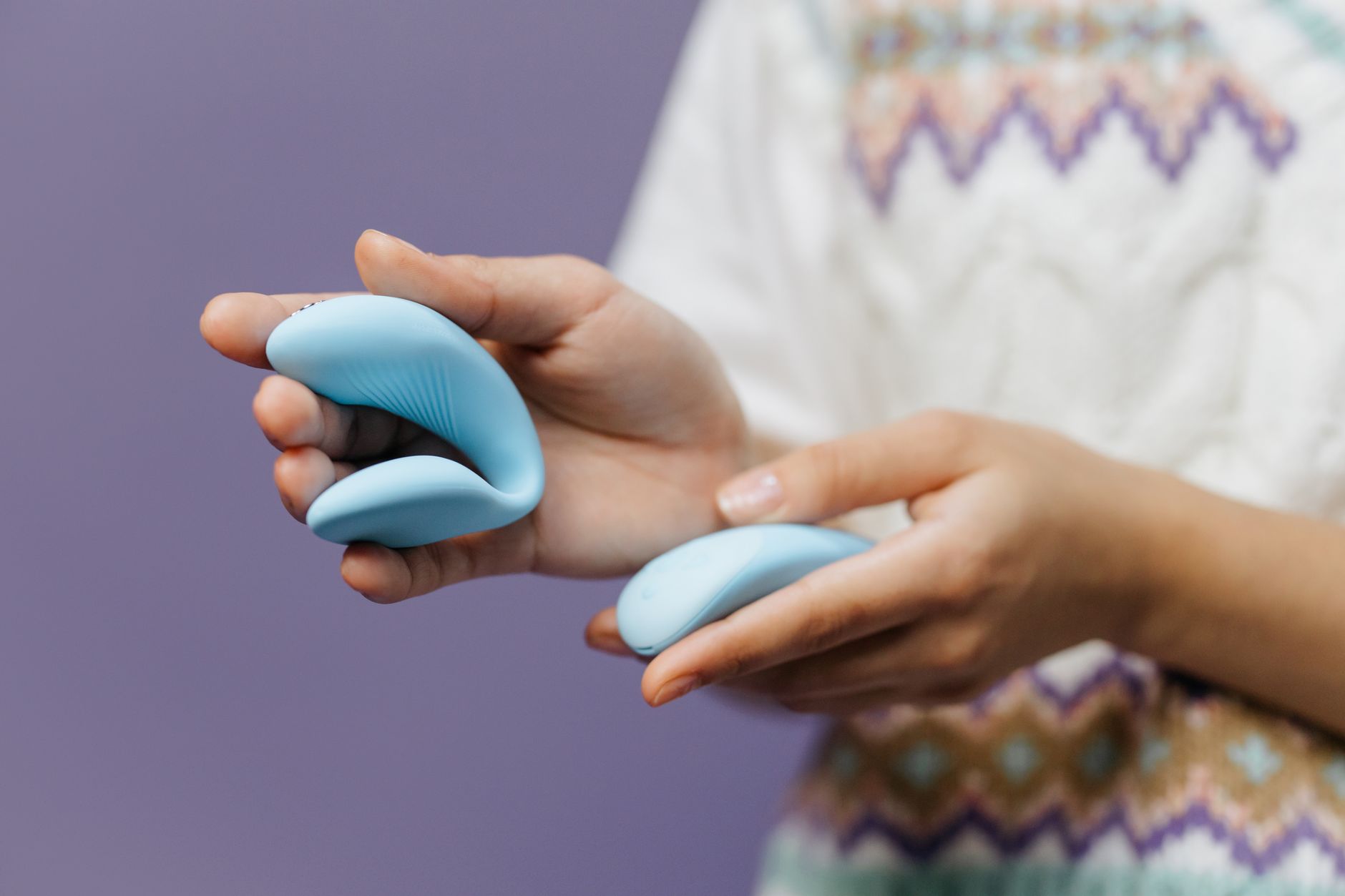
Partner sex happens on a rhythm that works for both of you. Solo pleasure happens on your timeline, using a lemon clitoral vibrator, whenever you want. These aren't in competition. They're both valid.
Why does this matter? Because when your partner knows you're taking care of your own pleasure, the pressure on them to provide it disappears. They're no longer the gatekeeper to your sexual satisfaction. And paradoxically, that often makes them more attracted to you and to the idea of sex together.
Lemon vibrators like the Lem work particularly well here because they're designed for precision and speed. You can take 20 minutes alone with a clitoral vibrator and have a genuine orgasm. That's not selfish. That's self-care. And it's the thing that often breaks the resentment cycle.
How to talk about it without triggering defensiveness
The conversation needs to happen outside the bedroom, when you're both calm. Not in the middle of being turned down.
Here's the frame: "I love you, and I want us to have a good sex life together. I also know my body better than anyone else, and sometimes I need time to warm up or I'm not in the mood. That's not about you. It's about me knowing what I need." Then add the practical part: "I'm going to use a lemon vibrator when I have solo time, so I'm taking care of that side of my sexuality. And I want us to schedule partner sex in a way that feels good for me too. Not pressure, just something to look forward to."
That reframe moves the conversation from "I don't want you" to "I want us both to feel good." It's a completely different energy.
Setting a rhythm that doesn't feel like obligation
Scheduled sex sounds unromantic until you actually try it. Then it becomes liberating.
When you know sex is happening on, say, Friday and Sunday evening, your brain can relax the other five days. You're not bracing for an advance. You can actually think about whether you want it when the time comes. And sometimes, knowing it's coming actually makes you more interested. Anticipation is its own kind of foreplay.
Start with what feels manageable. If your partner wants daily sex and you're thinking once a week, maybe you land on twice a week. Or three times. The point is it's a number you chose, not a number you're defaulting into.
On the days when partner sex is scheduled but you're still not feeling it? That's when your lemon vibrator becomes essential. You're not avoiding intimacy, you're redirecting it. You can have an orgasm alone while your partner reads or watches TV nearby. You're connected without the pressure. And sometimes that actually creates more closeness than traditional sex.
Why solo pleasure with a lemon clitoral vibrator changes everything
There's a specific reason I recommend lemon vibrators for this situation. They're fast, they're precise, and they don't require your partner to do anything. You can take 15 to 25 minutes, have a genuine orgasm, and feel like your body got what it needed.
When you're regularly having your own pleasure satisfied, something shifts. You stop feeling resentful about your partner's desire. You stop feeling guilty about your own lack of interest. And here's the weird part: sometimes that actually increases your interest in partner sex, because you're not approaching it from a place of depletion.
Buy a lemon clitoral vibrator if you don't have one. Use it. Solo pleasure is not the enemy of couple sex. It's the thing that saves couple sex.
The conversation with your partner about what solo pleasure means
Some partners interpret solo pleasure as rejection. "If you're using a vibrator, why do you need me?"
That's a fear worth addressing directly. Tell your partner: "This isn't about replacing you. This is about me knowing my body and taking care of it. It actually makes me feel better, and when I feel better, I'm more available for us."
You can even invite them in sometimes. Some couples find that one partner using a lemon vibrator while the other partner touches them, talks to them, or just watches creates a really intimate experience. It's not traditional sex, but it's connection.
The key is that it's a choice, not an obligation. You're not performing your sexuality for them. You're just being together while both of you experience pleasure.
When desire starts shifting on its own
This is the part that surprises people. Once the pressure lifts, desire sometimes comes back.
It doesn't always. Some people genuinely have a lower desire than their partner, full stop, and that's fine. But many people discover that their low desire was actually low desire-under-pressure, which is a completely different thing.
When you know you're not being pressured, when you know your solo pleasure is handled, when you know sex is scheduled so you can anticipate it instead of dread it. That's when your actual desire can emerge.
It might be different than your partner's desire. It might still be lower. But it'll be real.
The practical setup that works
Here's what I recommend to couples in this situation:
First, get a lemon vibrator that's yours. The Lem is designed specifically for clitoral pleasure and works quickly. Keep it in a drawer next to your bed, somewhere you can access it easily. This removes the secrecy and shame around solo pleasure.
Second, have a conversation about frequency. Not "how often do you want sex," but "what does a sex schedule look like that feels sustainable for both of us?" Write it down. Make it real.
Third, give it three months. That's how long it usually takes for a new rhythm to feel normal instead of awkward.
Fourth, check in with your partner. Not "are you happy with the schedule," but "how are you feeling about us right now?" See what's shifted.
When this framework isn't enough
Sometimes mismatched desire is a symptom of something else. A partner feeling emotionally disconnected. A history of criticism or contempt. Hormonal changes. Medication side effects.
If you've set a schedule, you're using lemon vibrators for solo pleasure, and your partner still feels rejected or you still feel pressured, it might be time to work with a couples therapist. There's usually something underneath the desire mismatch that needs attention.
But most of the time, this framework alone changes everything. Because you're removing the shame, removing the pressure, and acknowledging that both solo pleasure and partner sex are valid. That's when real intimacy can actually happen.
People also ask
Is it normal to have a lower sex drive than your partner?
Completely normal. Sexual desire exists on a spectrum, and two people rarely land in exactly the same spot. Mismatched desire isn't a sign of incompatibility. It's just a logistics problem that requires a conversation and a system. Couples who navigate this well usually report feeling more connected, not less, because they've had to be intentional about intimacy instead of assuming it.
Does using a vibrator mean I don't want my partner?
No. Solo pleasure and partner pleasure are separate. Using a lemon clitoral vibrator is self-care, not a substitute. It's actually the thing that often makes partner sex feel better because you're not approaching it from a place of guilt or pressure. Your partner's presence doesn't have to be the only source of your sexual satisfaction.
How often should we schedule partner sex if we have mismatched drives?
There's no universal answer. It depends entirely on what both of you can sustain without resentment. Some couples land on twice a week, some on once a week, some on once every two weeks. The key is that it's a number you both chose, and that you're taking care of solo pleasure in between. Start with something manageable and adjust as you go.
What if my partner feels threatened by my vibrator?
Have the conversation directly. Tell them: "This isn't about replacing you. This is about me taking care of my body. It actually makes me feel better and more available for us." Some partners worry it means they're not "enough." Remind them that your vibrator can't provide emotional intimacy, presence, or connection. That's what they provide. The vibrator just handles the mechanics sometimes. You might even invite them to watch or touch you while you use it. That can be genuinely intimate.
Can we use lemon vibrators together if we have different desires?
Absolutely. One partner using a lemon clitoral vibrator while the other partner is present, touching you, kissing you, or just being with you can create real intimacy. It's not traditional sex, but it's connection. And for couples with mismatched drives, it's often the thing that bridges the gap between solo pleasure and couple pleasure.
How long does it take for a new sex schedule to feel normal?
About three months. It feels awkward and intentional at first. Then your brain adjusts and it becomes just part of your rhythm. After a few months, you might even notice you're more interested in sex because you're anticipating it instead of dreading an unwanted advance.
The thing to remember
Mismatched sexual frequency doesn't mean the relationship is broken. It means you need a different system. Use how lemon vibrators improve intimacy when partners have mismatched sex drives as a starting point for thinking about solo pleasure. Then have a direct conversation about scheduling partner sex. Then give it time. Most couples find that once the pressure lifts and the shame disappears, they actually feel closer. Not because they want sex more often, but because they're both getting what they need, on their own terms.