Let's talk about what actually happens down there
Your pelvic floor just spent nine months stretching, then likely endured hours of labor, potential tearing or episiotomy, and possibly a surgical delivery. Even if you had a textbook vaginal birth or cesarean, the tissues in your pelvic region are different now. Swollen. Tender. Possibly numb in places. Possibly oversensitive in others. This is not drama. This is biomechanics.
Honestly, it's wild that anyone expects to jump back into pleasure within weeks. Yet somehow that's the cultural baseline. Your doctor clears you at six weeks, and suddenly you're supposed to feel normal again. You're not.
The pelvic floor after childbirth: what's actually different
Let's break down what's happening physically.
During pregnancy, your pelvic floor muscles lengthen and weaken to prepare for birth. Labor (vaginal or induced) puts enormous strain on those muscles. If you had a vaginal delivery, the tissues may have torn, been cut, or stretched beyond their pre-pregnancy length. If you had a cesarean, your abdominal muscles did the cutting work, but your pelvic floor still spent nine months under pressure. Scar tissue, inflammation, and neurological changes are all part of recovery.
Your estrogen levels are also tanking if you're breastfeeding. Lower estrogen means thinner vaginal tissue, less lubrication, and reduced blood flow to the area. This is temporary but real, and it matters for how sensation feels.
Meanwhile, your nervous system is flooded with cortisol, oxytocin (if nursing), and a cocktail of postpartum hormones that have nothing to do with pleasure. You're exhausted. Your body feels like it belongs to someone else. And now you're supposed to feel turned on.
When is it actually safe to use lemon vibrators again
Here's what I tell my clients: forget the six-week marker. That's when your doctor says penetrative sex is medically safe, not when your nervous system is ready for pleasure.
A realistic timeline looks like this.
Weeks 1-4: Don't touch anything sexual. Your body needs to bleed, heal, and stop feeling like an open wound. This isn't deprivation. This is intelligence.
Weeks 4-8: If you feel curious and have no pain, external touch is fine. Not vibration yet. Just your own fingers on external vulva tissues. Low pressure. High patience.
Weeks 8-12: Lemon clitoral vibrators on the gentlest setting can enter the picture if you're cleared by your pelvic floor PT or OB, and if you have zero pain. Start with just the external stimulation. No patterns. No intensity.
Beyond 12 weeks: If you're healing normally and not experiencing ongoing pain, you can explore what your body actually wants. But "normal" healing is slow and nonlinear.
This timeline assumes straightforward vaginal birth with minimal trauma. If you had severe tearing, cesarean delivery, or complications, add more time. Your pelvic floor PT is your guide here, not a blog post.
How sensation actually changes (and why it might feel weird)
Here's the part nobody warns you about: pleasure might feel different, and not always in bad ways.
Some people report numbness, especially if there's nerve damage from tearing or episiotomy. This usually resolves, but it takes months. Some feel hypersensitivity where they had none before. Some notice that orgasms feel flatter or harder to reach. Some find they actually feel more intensely because they're finally not pregnant anymore.
The skin in your vulva is thinner postpartum due to hormonal shifts. This means direct intense stimulation can feel too much, even on settings you used to love. Why Lemon Vibrators Work Better When You Have Low Desire From Hormonal Shifts covers this in detail, but the short version is: your tissues are sensitive right now. Respect that.
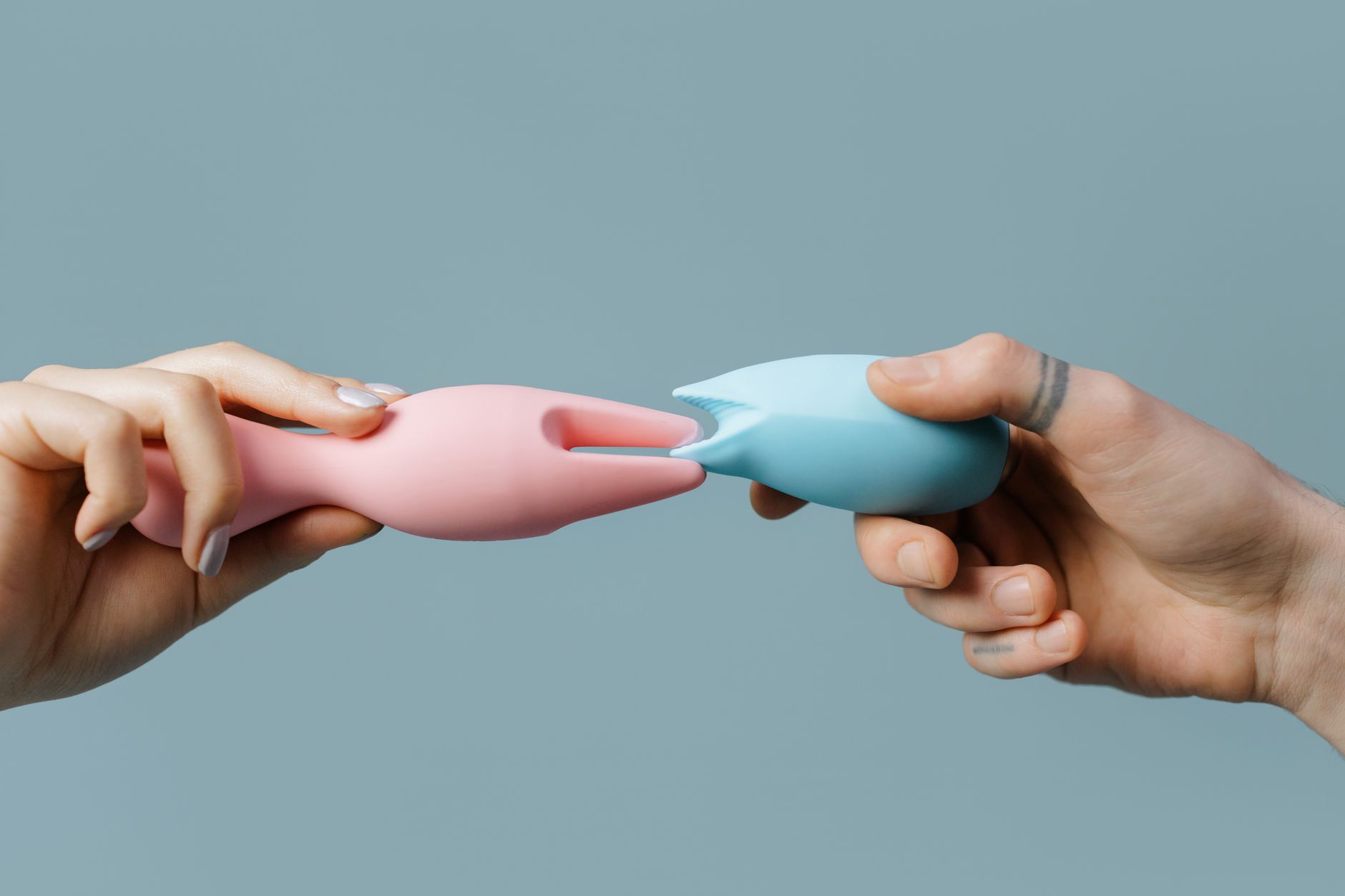
Many postpartum people find that air-suction stimulation (like The Lem) feels better than direct vibration because it's gentler on hypersensitive tissue and doesn't trigger pelvic floor tension the same way. You're not reaching for your old go-to. You're finding what works for this new version of your body.
The pelvic floor tension trap
Here's something crucial that most postpartum guides skip: your pelvic floor is probably already tight.
Hypertonicity (a pelvic floor that can't relax) is incredibly common after birth. You've been clenching those muscles for months to support the weight of pregnancy. Labor involved intense contractions. Recovery involves involuntary tension from pain and trauma. Your nervous system is in protection mode.
When you add vibration to a pelvic floor that's already wound up, you can increase that tension instead of decreasing it. This creates a cycle where pleasure becomes harder to access, not easier.
Before you bring lemon vibrators back, ask yourself: can I consciously relax my pelvic floor? If the answer is no or "I don't know," see a pelvic floor PT. They can teach you how to release tension, which actually makes pleasure more accessible when you're ready. How to Use Lemon Vibrators When You Have Pelvic Tension or Kegel Fatigue goes deeper into this.
Starting again: the actual protocol
When you're cleared and ready, here's how to reintroduce lemon vibrators safely.
Step one: low setting, external only. Not on the clitoris directly. On the outer labia or mons pubis. Get reacquainted with how vibration feels on skin that's been through trauma.
Step two: move closer gradually. Spend multiple sessions (days or weeks, not hours) at each distance from the clitoris before moving closer.
Step three: notice what happens to your pelvic floor. Are you clenching? Breathing? Does tension spike when you use the vibrator? If yes, pause. This isn't failure. This is your nervous system telling you it's not ready yet.
Step four: lubricate generously. External tissue is thinner. Water-based lube (The Lemon Vibes uses quality formulations) reduces friction and makes everything feel less intense.
Step five: stop if there's pain. Pleasure can feel strange. Pain is different. Pain means something is wrong. Stop, wait, check in with your PT or doctor.
Most people can use lemon clitoral vibrators fully by month 4-6 postpartum, but every body is different. There's no prize for speed.
Reconnecting with your partner (if you have one)
Postpartum is when couples often drift hardest. You're touched out. You're leaking from somewhere. Your body doesn't feel like yours. And now your partner might be hoping things "get back to normal."
Using lemon vibrators isn't foreplay toward partnered sex. It's a way to reconnect with your own pleasure first, on your own terms. That separation matters. Solo sessions teach your nervous system that pleasure is safe again. Once you know that, partnered sex becomes optional, not obligatory.
If your partner wants to be involved, set clear boundaries: they're watching or assisting, not directing. You're in charge of speed and intensity. If they can't handle that, that's information worth having now.
When to see someone
If pain persists beyond eight weeks, see a pelvic floor PT. This could be scar tissue, muscle tension, or nerve involvement. All of it is treatable.
If you're seven months postpartum and still have zero desire, that might be postpartum depression or an adjustment in how your body responds to touch. Talk to your OB or a therapist.
If you feel triggered by touch in ways that surprise you, trauma processing with someone trained in postpartum mental health is worth it.
Your pelvic floor recovery is not a solo project. It's a team sport.
The long view
Postpartum pelvic floor changes feel enormous in the moment. In context, they're one chapter of your body's story. Lemon vibrators will be there when you're ready. There's no rush. Your pleasure matters, and it matters more when it's actually yours again, not something you're performing for a timeline.
Start where you are. Go at the pace your nervous system tells you is safe. Use lube. Check in with professionals if things feel off. And remember: the goal isn't to get back to normal. It's to meet your new body where it actually is.
People also ask
How soon after delivery can I use any vibrator?
Medically, most OBs clear you for any penetration at six weeks postpartum. That doesn't mean your pelvic floor is healed or your nervous system is ready. Many people need 12-16 weeks before vibrator use feels good. Listen to your body, not the calendar. If you have pain, numbness, or hypersensitivity, wait longer. If you're bleeding heavily, wait longer. If your pelvic floor is tight and tense, definitely wait longer.
Can using a lemon vibrator make pelvic floor tightness worse?
Yes, it can. If your pelvic floor is already hyperactive from birth trauma or recovery tension, adding vibration can signal your nervous system to clench harder. This is why pelvic floor physical therapy before returning to vibrators is smart. A PT can assess whether you're dealing with weakness or tension, and guide you accordingly. Some people need to relax first, then add vibration. Some need strengthening work. One size doesn't fit postpartum bodies.
Should I wait until I stop breastfeeding to use lemon vibrators?
No. Low estrogen from breastfeeding makes tissue thinner and sensation different, but it doesn't make pleasure unsafe. It just means you might need more lubrication, gentler settings, and longer warm-up time. If you want to wait until weaning for comfort reasons, that's fine too. There's no medical requirement to hold off.
What if my partner wants sex before I'm ready for lemon vibrators?
Your timeline is not negotiable. You can have a conversation about it: "My body is healing. I'm not ready for penetration or vibrators yet, but here's what I might want..." If your partner pushes past your boundary, that's a relationship issue worth addressing with a therapist. Postpartum is when resentment grows fastest. Set boundaries now.
Can I use lemon vibrators after a cesarean?
Absolutely. Your vaginal tissue wasn't physically torn, but your nervous system still went through trauma. Your abdominal scar is healing. Your hormones are tanking. Wait the same timeline as anyone else postpartum. The difference is that cesarean recovery involves abdominal healing too, so penetration might feel uncomfortable even if external vibration feels fine. Go slow. There's no rush.
How do I know if pain is normal healing or a sign something's wrong?
Normal postpartum sensation is soreness, tenderness, swelling, and sensitivity. That gradually improves over weeks. Sharp pain, burning that gets worse with vibration, or pain that doesn't improve past week 8 is worth flagging to your OB or PT. Pelvic floor dysfunction, scar tissue complications, and infection all need professional eyes. Don't tough it out.
References
Farrell, S. A., et al. "Pelvic floor muscle training after childbirth." Journal of Obstetrics and Gynaecology Canada (2011).
Junginger, B., et al. "Postpartum pelvic floor dysfunction: short and long-term effects of childbirth on continence and sexual function." The Obstetrician and Gynaecologist (2015).
Kelly, C. A., et al. "Postpartum recovery and the role of pelvic floor physiotherapy." Current Opinion in Obstetrics and Gynaecology (2020).
American College of Obstetricians and Gynecologists. "Postpartum pelvic floor dysfunction and rehabilitation." ACOG Practice Bulletin (2019).
If postpartum recovery feels overwhelming or you're struggling to reconnect with your body and your partner, reach out. The Lemon Vibes community is here to support you through this transition.