
Let's talk about the gap between what you've tried and what might actually work
Difficulty reaching orgasm affects roughly 40% of people with vulvas at some point in their lives. That's not small. And most of the advice out there assumes the problem is psychological, which sometimes it is. But sometimes your nervous system just needs a different signal. A lemon vibrator—particularly one that uses air-suction technology like The Lem—creates that signal in a way traditional vibrators often don't.
I'm not saying this will solve everything. But if you've spent years with a standard vibrator and felt nothing, or felt close but never quite crossed the threshold, the issue might not be you. It might be the tool.
Why standard vibration doesn't always work for anorgasmia
Here's the thing about traditional vibrators: they rely on oscillation. Your clitoris gets stimulated through rapid back-and-forth or circular movement. For some nervous systems, this creates arousal. For others, it creates numbness, distraction, or a plateau where arousal builds but never peaks.
Why? Three reasons.
First, the clitoris has about 8,000 nerve endings, but they're not distributed evenly. Some are sensitive to friction, some to pressure, and some respond better to suction. Traditional vibration stimulates one pathway. If that pathway isn't your dominant one, you're working against your own physiology.
Second, vibration can desensitize tissue over time. The receptors get used to the sensation. You might notice needing higher speeds or longer sessions to feel anything at all. That's not weakness. That's habituation.
Third, vibration is often intense right out of the gate. For people with difficulty reaching orgasm, starting at intensity 8 on a standard vibrator is like turning on a spotlight when you need a candle. Your nervous system tenses up. Arousal collapses.
How suction-based lemon vibrators change the game
Suction technology works through a completely different mechanism. Instead of vibrating, it creates a gentle pulse or wave of pressure around the clitoral area. Think of it less like a jackhammer and more like a soft, rhythmic squeeze.
This matters because suction activates deeper nerve clusters in the clitoris and vulva that vibration alone often misses. Research on suction-based devices shows higher orgasm rates for people who struggle with traditional vibrators, especially those with difficulty reaching orgasm from standard penetration or external stimulation.
A lemon clitoral vibrator uses graduated suction patterns. Most start at pattern 1, which feels almost imperceptible. You're not fighting your body's resistance. You're meeting it where it is.
The other advantage: suction doesn't cause numbness. Your nervous system stays alert because the sensation changes constantly. It's not repetitive in the way that can trigger habituation. Many people report that suction-based stimulation feels fresh even after 20 minutes, whereas traditional vibrators can feel like static by minute 10.
The setup that actually increases your chances
If you've struggled with reaching orgasm, your first session with a lemon vibrator isn't the time to dive in blind. Here's what I recommend.
Start alone, without pressure. If you're with a partner, that's wonderful, but for this first exploration, give yourself solo time. Anorgasmia often involves subtle tension around performance or being watched. Removing that removes one variable.
Set 30-45 minutes. Not because you'll need all of it, but because rushing triggers the nervous system to tighten. You want time to warm up without watching the clock.
Before you touch the device, touch yourself. Spend 5-10 minutes on regular external stimulation, breathing, and noticing where you feel sensation. This activates your arousal pathway and signals your nervous system that pleasure is the plan. Then introduce the lemon vibrator at its lowest setting.
Don't aim for orgasm. Aim for sensation. Notice what patterns feel different from vibration. Notice if anything creates a flutter or a pull instead of numbness. If nothing happens in 20 minutes, that's fine. Your nervous system is learning that this tool is safe and different.
Many people need 3-5 sessions before their body trusts the sensation enough to build arousal. That's completely normal.
Pattern selection matters more than you'd think
Most lemon sexual toys have 8-12 patterns. Don't just start at pattern 1 and assume that's your answer. Some people find their sweet spot in pattern 3 or 4, where there's enough rhythm to build on but not so much intensity that it numbs.
Others respond better to patterns with irregular timing. The brain gets engaged when stimulation is slightly unpredictable. It prevents the habituation I mentioned earlier.
Here's my protocol: try patterns 1 and 2 on your first session. Move to 3-5 on the second. By session three, you'll know which patterns your nervous system responds to. Then practice with those.
Many people with difficulty reaching orgasm also benefit from alternating patterns mid-session. Use pattern 3 for two minutes, switch to pattern 6 for a minute, go back to 3. The variation keeps your nervous system engaged and often pushes arousal over the threshold where it plateaus.
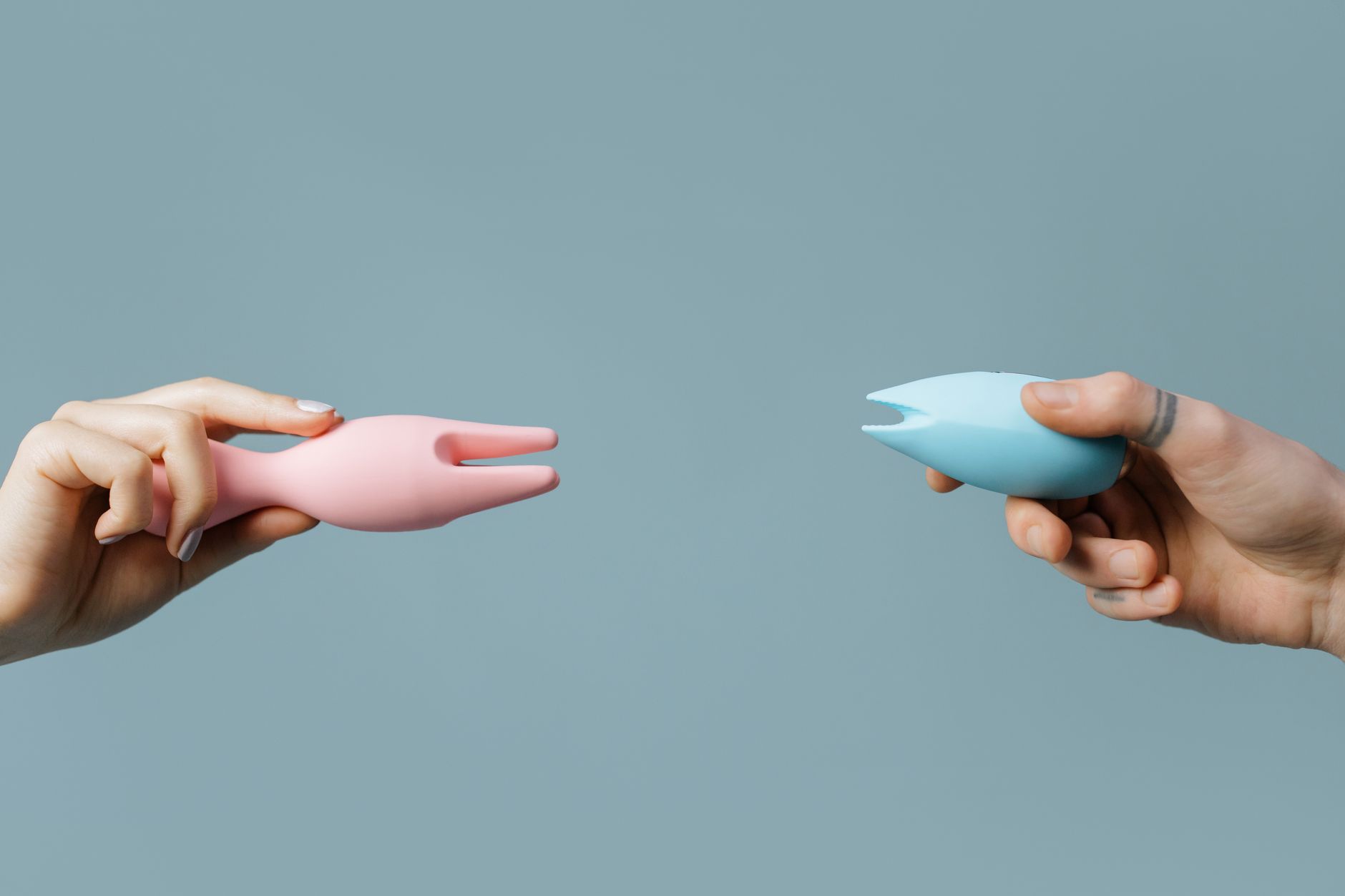
Photo by cottonbro studio on Pexels
The pelvic floor component nobody mentions
Here's something I see constantly in my practice: people with anorgasmia also have pelvic floor tension. Your body holds the muscles around your vulva, vagina, and rectum tight as a protective reflex. Over years of difficulty reaching orgasm, that tension becomes chronic. The muscles literally can't relax enough for an orgasm to build.
A lemon vibrator alone won't fix that. But combined with pelvic floor awareness, it becomes powerful.
Before using your device, do this: lie on your back, knees bent. Breathe in for four counts, then out for six. As you exhale, consciously relax your pelvic floor. Imagine the muscles softening and spreading. Do this for 2-3 minutes. Your nervous system will begin the session in a relaxed state instead of a defended one.
If you have diagnosed pelvic floor dysfunction, consider pairing device use with pelvic floor physical therapy. The combination is far more effective than either alone. A PT can also help you understand which muscles are holding tension and guide you in releasing them during pleasure.
When lemon vibrators work better with a partner
If you're in a relationship, the dynamic changes. Some people find that having a partner present, even passively, adds pressure that prevents orgasm. Others find that partner involvement deepens arousal.
The key is communication without spectating. Tell your partner: "I'm exploring this on my own timeline. Your job is to be present and warm, not to watch for results." Many couples find it helps if the partner touches something else, like your chest or inner thigh, while you use the lemon vibrator. This distributes sensation across your body instead of narrowing it all to one tool.
If you're with someone who understands your difficulty reaching orgasm as a shared challenge rather than a personal failure on your part, that shifts everything. Partnership becomes an asset instead of pressure.
What changes when you stop expecting and start exploring
Honestly, half of what makes lemon vibrators effective for anorgasmia is permission. You're giving yourself permission to spend time on pleasure without a goal. You're saying: "My body deserves to explore sensation, whether or not an orgasm happens."
Orgasms build on that foundation. They arrive when your nervous system stops bracing for them.
Many people report that after 4-6 weeks of regular exploration with a lemon clitoral vibrator, orgasms begin happening. Not every session. But they happen. And they feel different than what they'd expected: sometimes more subtle, sometimes more full-bodied, sometimes with less clitoral focus and more overall sensation.
That's your nervous system learning a new pathway. That's not a flaw. That's adaptation.
FAQ: Difficulty Reaching Orgasm and Lemon Vibrators
Can lemon vibrators really help if I've never had an orgasm?
Yes, but with realistic expectations. Suction-based stimulation creates sensation that's different enough from manual or traditional vibrator use that it can unlock pleasure for people who've felt blocked. Many people report their first orgasm with a lemon vibrator even after years of anorgasmia. The device isn't magic, but it removes one barrier: the wrong type of stimulation. If your difficulty has a psychological or relational component, a vibrator alone won't solve it, but it removes the "maybe my body doesn't work" variable.
How long does it usually take to notice a difference?
Most people notice a sensory difference in the first session. Whether that translates to orgasm typically takes 3-6 weeks of regular use. Your nervous system needs time to trust new sensation and build pathways. If nothing's shifted after eight weeks, talk to a therapist or sex educator. Sometimes anorgasmia needs more than a better tool.
What if I feel numb or nothing at all?
That's usually a sign you're either starting at too high an intensity, or your nervous system needs more warm-up time. Go back to the setup I mentioned: solo time, no clock pressure, manual stimulation first, then lemon vibrator at pattern 1. Some people also benefit from external heat. A warm shower or heating pad on your lower abdomen before use can relax your nervous system enough to feel sensation.
Do I need a specific type of lemon vibrator for difficulty reaching orgasm?
Suction devices like The Lem are gold-standard for anorgasmia because of how the nervous system responds to suction versus vibration. That said, not every clitoral vibrator with suction will work for every person. Your individual nervous system matters more than the brand. Start with a well-reviewed option, give it consistent exploration time, and if it's not your match after 6-8 weeks, try something else.
Can medication or hormones affect whether lemon vibrators work?
Absolutely. Hormonal shifts, antidepressants, and blood pressure medications can all change sensation and arousal. If you're on medication and experiencing new anorgasmia, talk to your prescriber before assuming it's a tool problem. That said, many people find that lemon vibrators work better than traditional vibrators even with these medications because the sensation profile is different. You may need more warm-up or longer sessions, but the mechanism is still solid.
Is it normal to need longer sessions with a lemon vibrator than with manual stimulation?
Yes. Suction builds arousal differently than finger stimulation. Sometimes it takes longer to reach a peak, but the plateau is less likely. If you find yourself needing 45+ minutes regularly, that might signal that you're starting at too low an intensity or need more warm-up. Experiment with slightly higher patterns or longer foreplay before introducing the device.
The bottom line: Your body isn't broken, and neither is the approach
Anorgasmia is lonely. You feel like your body's broken, or your partner feels like they're not doing something right, or you're ashamed of needing a tool at all. None of that is true.
Your body isn't broken. It's just been waiting for the right signal.
Lemon vibrators—particularly suction-based lemon sexual toys that mimic different sensation patterns—work for anorgasmia because they create pathways your nervous system can actually respond to. Not because you need to be fixed. Because you deserve pleasure that matches your actual physiology, not some generic template.
Start with curiosity instead of pressure. Give yourself time. Notice what your body tells you. And if you want support in the conversation with your partner or therapist about this, reach out. That's what we're here for.
Your pleasure matters. And it's worth exploring.