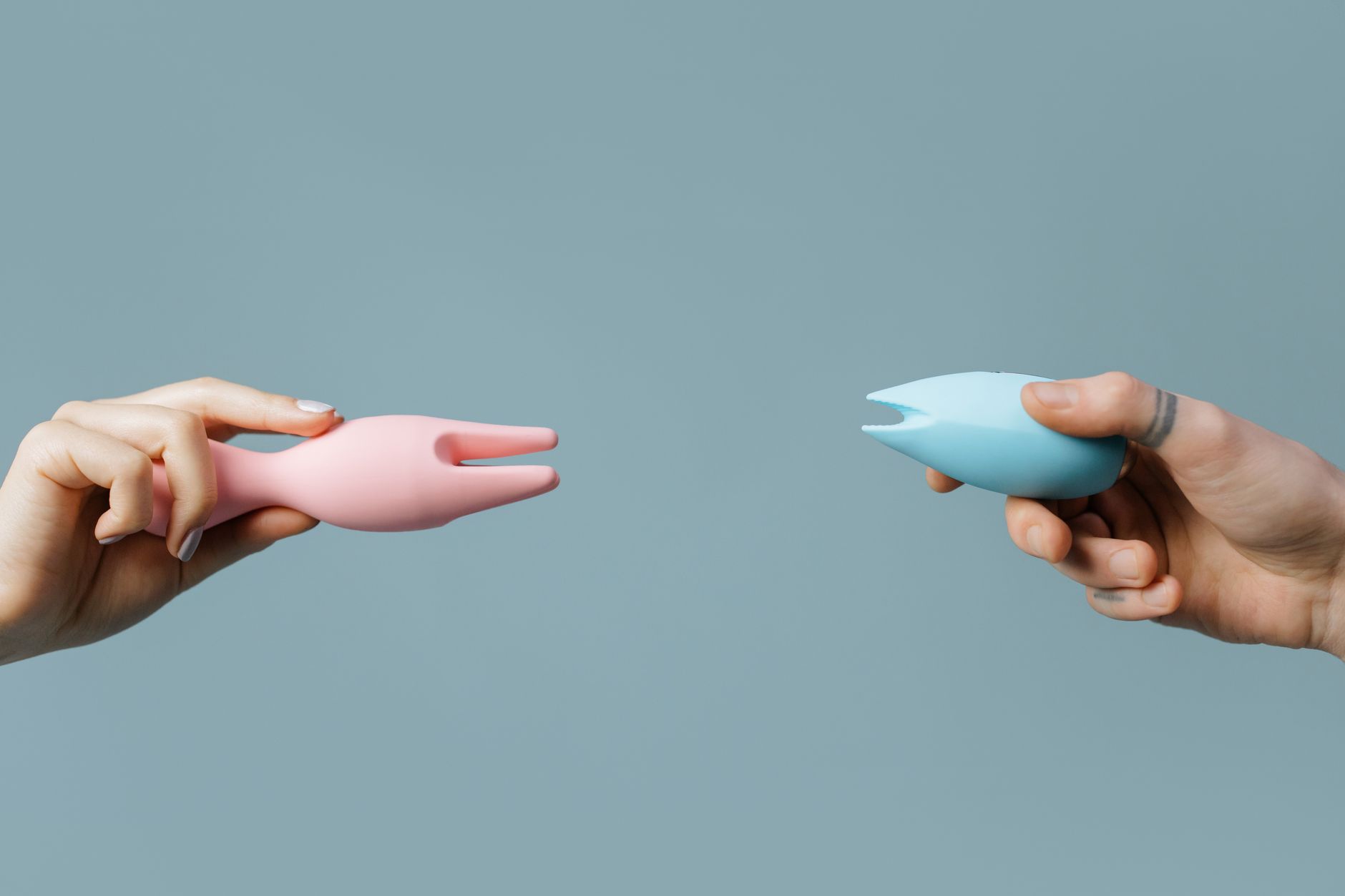
Let's start here: sensitivity is not a problem to solve
Sensitive vulva tissue gets framed as a limitation. But here's what I've seen in my practice: people with sensitive vulvas often have the most nuanced, interesting experience with pleasure once they find the right match. It's not about powering through discomfort. It's about understanding what your body is actually asking for.
Most standard vibrators miss the mark for sensitive tissue. Too much direct pressure, too much noise, too much assumption that "more intensity equals more pleasure." Lemon vibrators, including the air-suction design that defines the lemon clitoral vibrator category, work differently. They use suction and pulse patterns instead of straight vibration, which is why people with sensitive skin report less irritation and more sensation.
Here's what changes when you have sensitive vulva tissue, and what actually helps.
Why sensitive vulvas respond differently
Sensitivity usually means one of three things. First, the tissue itself has lower pain thresholds or inflammation from conditions like vulvodynia or dermatitis. Second, the nerve endings are densely packed and easily overstimulated by rough texture. Third, past trauma or pelvic floor tension makes direct pressure feel threatening instead of good.
Whatever the cause, the response is the same: direct, intense vibration on sensitive tissue often triggers a pain response instead of pleasure. Your body isn't broken. It's just sending a clear signal about what it needs.
Lemon adult toys built with air-suction technology bypass this problem. Instead of vibrating directly against your vulva, they create gentle suction that stimulates the entire clitoral complex without the shearing friction of a traditional vibrator. The effect is broader, less localized, and for many people with sensitive tissue, significantly more comfortable.
Starting with the right lemon vibrator intensity
If you've tried regular vibrators and felt irritation or numbness, the issue was probably intensity level, not the tool itself. Most standard vibrators start at "medium" and go up from there. The Lemon Clitoral Vibrator has multiple settings that let you start almost impossibly low.
Begin on pattern one. Not because you're being cautious (though you are). But because lemon suction vibrators work more efficiently than traditional vibration. Pattern one already stimulates a wide surface area without forcing your tissue to accommodate direct pressure.
Spend a full session or two just exploring pattern one and two. Your nervous system needs time to register that this sensation is safe. Sensitivity often comes packaged with protective responses. Your pelvic floor might clench automatically. Your mind might stay focused on whether it's "supposed" to feel good. Low intensity gives your brain the space to learn that this is different from whatever caused the sensitivity in the first place.
Lubrication is non-negotiable
Here's where people with sensitive vulvas often make a small mistake. They skip lube because lemon suction vibrators don't require it mechanically. The suction creates its own glide. But lube isn't just about friction. It's a barrier. It buffers your tissue from direct contact and keeps the whole area hydrated.
Use water-based lube, applied generously around the entrance and across your vulva before you start. Reapply halfway through if you're going longer than 15 minutes. This is especially important if you have any inflammatory condition or if your natural lubrication is inconsistent.
Water-based is non-negotiable if you're using a lemon sexual toy made of silicone. Silicone-based lubes degrade silicone over time. Stick with water-based, and you'll preserve your lemon vibrator while protecting your skin.
Pacing matters more than you think
Sensitive tissue benefits from slower, more intentional pacing. Instead of jumping from pattern one to pattern five, spend five to ten minutes on each setting. Notice what shifts. Does the sensation intensify? Does your pelvic floor relax? Are you getting closer to orgasm or just more numb?
If numbness appears, take a break. Seriously. Sensitivity doesn't mean your tissue is weak. It usually means it's protective. Pushing through numbness is your body saying "I need a reset." Stop, take five minutes, breathe, then come back at a lower intensity.
Many people find that the most satisfying orgasms from lemon clitoral vibrators come not from sustained maximum intensity but from building gradually, backing off when you get close, then building again. This rhythm gives sensitive tissue time to recover between peaks of stimulation.
The angle and placement question
If you've only tried vibrators with direct clitoral contact, try angling a lemon sucker slightly differently. Instead of centering it directly on your clitoris, angle it slightly toward the clitoral hood or the outer labia. This gives you all the stimulation with less direct pressure.
Some people with sensitive vulvas find that placing the suction over the clitoral hood first, then gradually moving down to direct clitoral contact as arousal builds, transforms the whole experience. Your tissue relaxes and becomes less protective as blood flow increases. This staged approach honors that.
You're also in control of the seal. You don't need to press hard. A gentle seal works just as well and often feels better on sensitive tissue.
When external stimulation isn't the answer
Not everyone with a sensitive vulva wants external clitoral stimulation at all. Some people get more reliable pleasure from internal sensation, blended stimulation (both), or entirely different kinds of touch. A lemon vibrator isn't a one-size prescription.
If you've tried the settings and pacing above and still feel discomfort, it might not be a fit. And that's okay. Pleasure isn't one tool. It's about understanding your own nervous system and building a practice that works with it, not against it.

Photo by cottonbro studio on Pexels
Timing and your body's readiness
One huge factor people overlook: the timing of your cycle matters. If you have a vulva with hormonal fluctuation, your sensitivity changes throughout your cycle. During your period, you might feel more sensitive. Right before ovulation, you might feel more receptive. Two weeks after ovulation, sensitivity often spikes again.
Instead of fighting this, track it. Notice which days of your cycle feel easiest with your lemon vibrator. On higher-sensitivity days, give yourself permission to stick with lower intensities or skip toy play entirely. This is not failure. It's working with your body's real needs.
Similarly, stress and fatigue dial up sensitivity. If you've had a brutal week, your nervous system is more protective. You might need extra lube, lower intensity, and more patience. That's information, not limitation.
Communication if you're with a partner
If a partner is involved, this conversation is separate from pleasure itself. "I have a sensitive vulva" is a fact about your anatomy. "I want to use a lemon clitoral vibrator together" is a choice about what you want to explore. Keep them untangled.
Your partner doesn't need to understand the mechanics of your sensitivity to support it. They just need to hear: "I'm going to start low. I might need to pause. I might ask for lube, a break, or to try a different angle. None of that means something's wrong. It means I'm taking care of myself."
The Lemon Clitoral Vibrator is a solo or partnered tool. If it's partnered, the person using it should always be the one in control of intensity and pacing.
FAQ: Sensitive vulva and lemon vibrators
What's the difference between a lemon vibrator and a regular vibrator if I have a sensitive vulva?
Regular vibrators typically use steady vibration that presses directly against your tissue. Lemon suction vibrators use air-pulse patterns that create gentle suction across a wider area. This is less concentrated, which is why sensitive tissue often responds better. You also get more granular control over intensity with lemon vibrators, starting much lower than most standard toys.
Will a lemon sexual toy irritate my vulva if I have vulvodynia?
It depends on your specific triggers and how you use it. The lower starting intensity and broader stimulation pattern help many people with vulvodynia. But not everyone. Start with the lowest setting, spend time on each level, use plenty of lube, and notice your body's response. If pain appears, stop and try a different approach. Consider mentioning lemon vibrators to your pelvic floor physical therapist or vulvovaginal specialist for personalized guidance.
Can I use a lemon clitoral vibrator if I have dermatitis or eczema on my vulva?
If you have active dermatitis, any vibrator might irritate. Wait until the skin has fully healed. When you're ready to try again, water-based lube becomes extra important as a barrier. Some people find that silicone toys (like all lemon vibrators) are gentler on sensitive skin than other materials because silicone doesn't absorb bacteria or irritants. Start lower, pace slower, and be willing to take more frequent breaks.
How long should a session be if I have a sensitive vulva?
There's no "right" length. Sensitive tissue often needs 15 to 25 minutes to build arousal safely. You might take breaks between intensity levels. You might stop and restart multiple times. That's not wasting time. That's giving your nervous system the space it needs. Some sessions might be five minutes. Others might be 40. Your pleasure doesn't have a schedule.
Should I use numbing cream or anything else to make vibrator use more comfortable?
No. Numbing creams mask sensation, which means you lose valuable feedback about whether something is actually comfortable or just numb. That's the opposite of what sensitive tissue needs. Instead, focus on pacing, lube, lower intensity, and the specific angle that feels best to your body. If nothing works, that's worth discussing with a pelvic floor specialist.
What if lemon vibrators still don't feel good after I've tried all of this?
Then a lemon clitoral vibrator isn't your tool. Pleasure is vast. Some people with sensitive vulvas thrive with manual touch, temperature play, or internal sensation instead. Some people need a pelvic floor physical therapist to help release protective tension before any vibrator feels good. Some people have orgasmic potential that doesn't route through traditional vibration at all. All of that is normal. Explore, listen to your body, and let go of the idea that one tool should work for everyone.
What actually happens when you honor your sensitivity
Here's what I see most often: people with sensitive vulvas who find the right approach often report more reliable, more complex orgasms than people who've never had to slow down and pay attention. When you have to tune in closely, you learn your own wiring. You know exactly what you need. You're not chasing an idea of what pleasure "should" feel like.
A lemon vibrator, used with the right intensity, pacing, and lube, can be part of that discovery. Or it might not be. Either way, the point is this: sensitivity isn't something to overcome. It's something to work with. Your vulva isn't broken. It's just telling you clearly what it wants.
Ready to explore? Start low, go slow, and trust what your body tells you. If you have questions about what might work for your specific situation, reach out and let's talk.